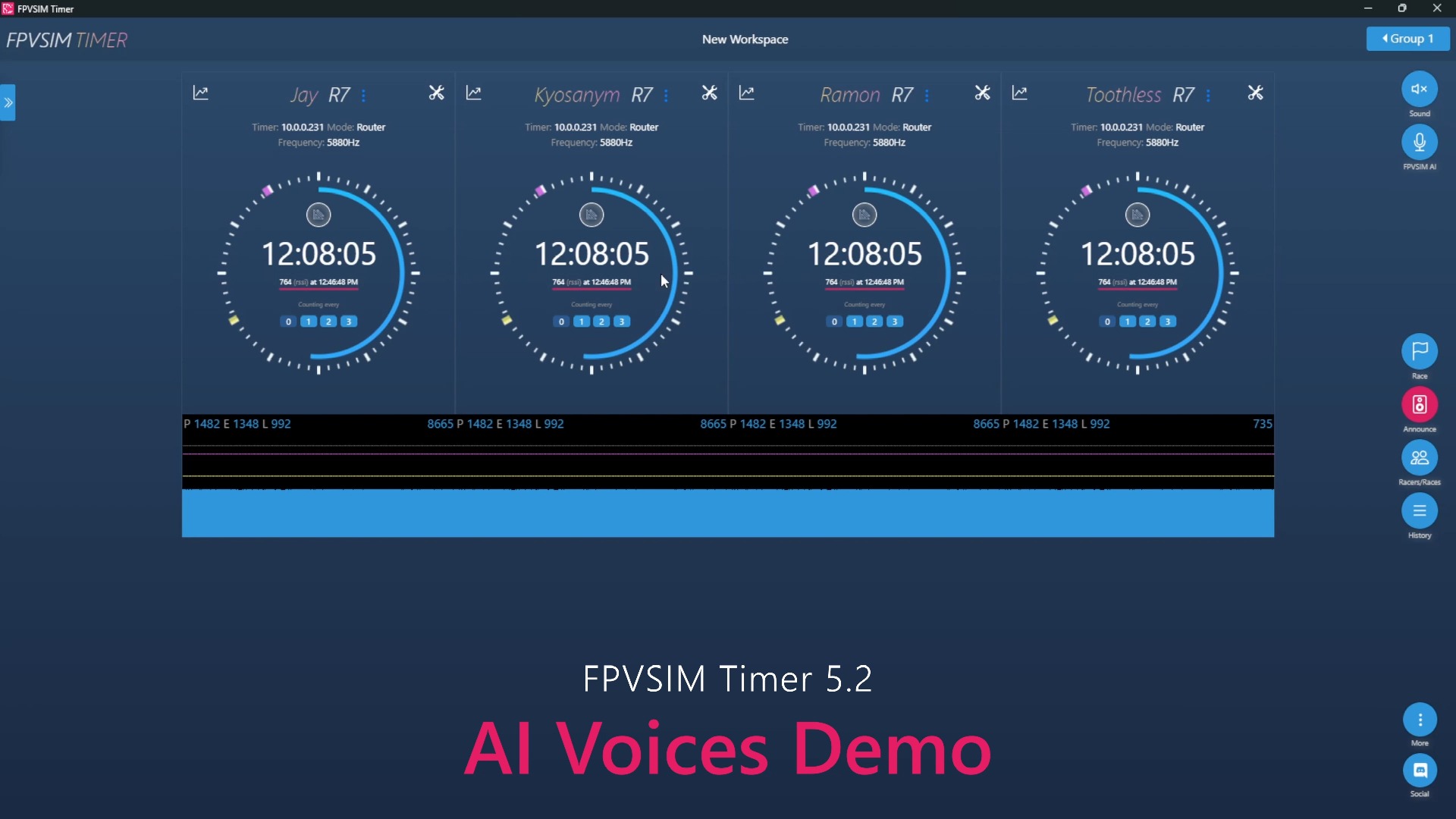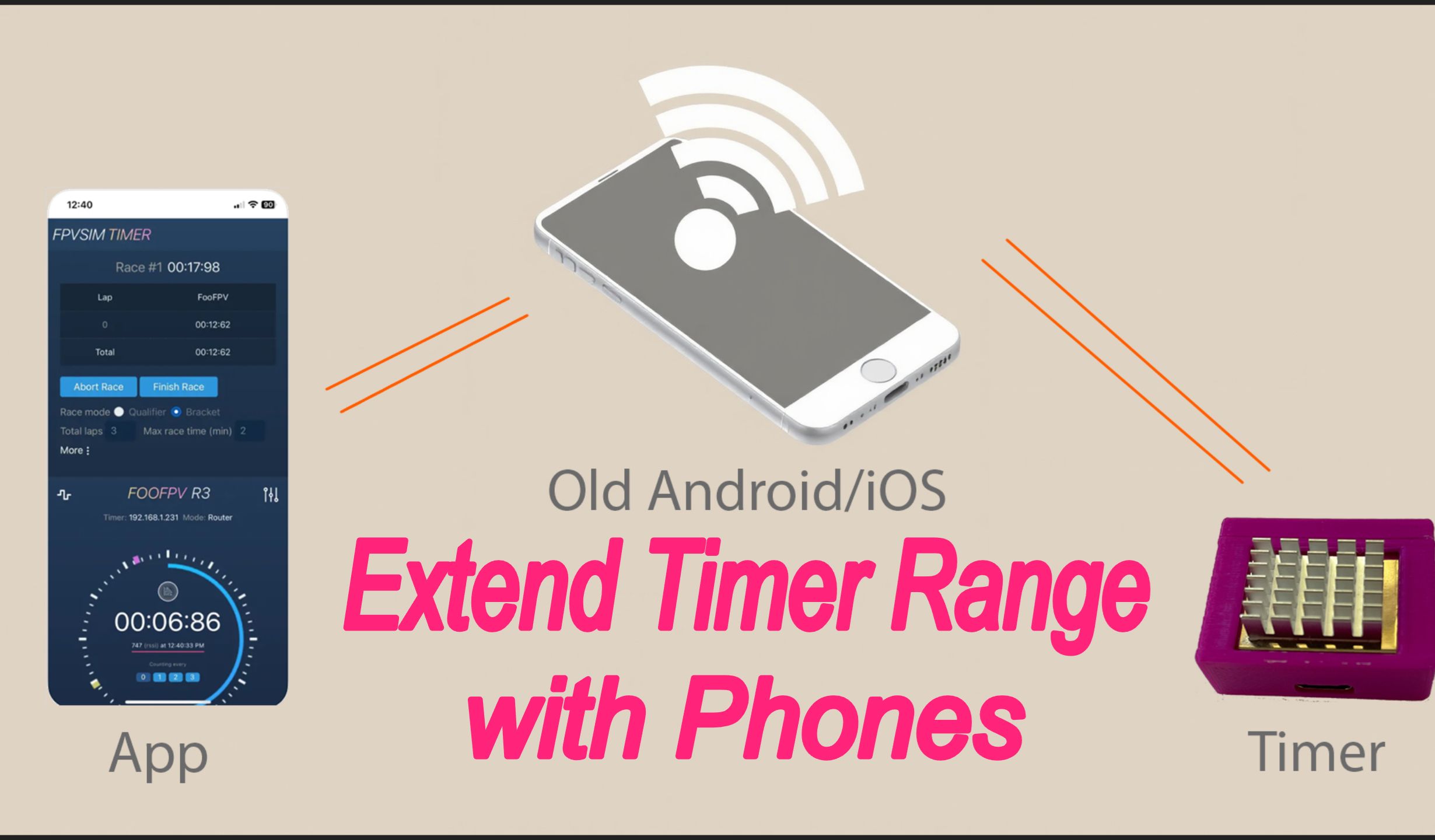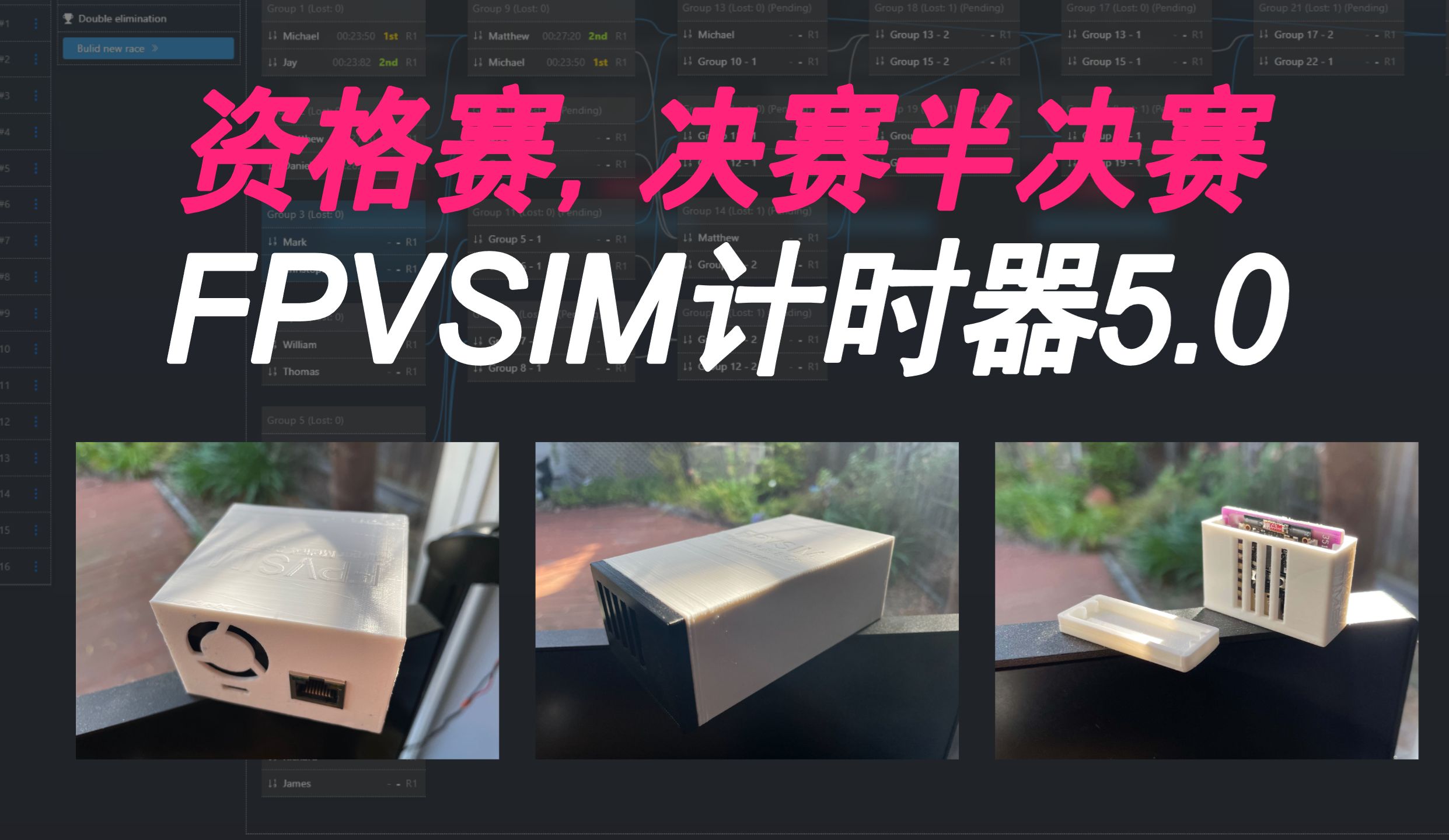
This non-narrated comparison video puts the FPVSIM Timer 5 and LiveTime timing results side by side: In the IRC eight-channel setup shown, the differences fall within approximately ±0.1 seconds. It demonstrates that this set of field configurations has usable consistency, but is not a universal accuracy certification for all hardware, track and event conditions.
What does the picture comparison actually say?
Video showing timing readings from FPVSIM Timer 5 and LiveTime in the same run and reporting the observed difference to within approximately ±0.1 seconds for the IRC eight-channel configuration used. What deserves attention here is how close the results given by the two systems for the same line-crossing event are, rather than just how many decimal places a certain system displays. More decimal places does not automatically mean a more accurate field measurement.
Official notes suggest that this level of consistency is generally sufficient to cover the common needs of national level racing events. This conclusion should be understood in the context of the demonstration: it describes the results of a specific device and setting, which can prove that the configuration performed stably in this comparison, but cannot replace re-verification against another set of antennas, receiving modules, site interference and flight lines.
±0.1 seconds is not a universal guarantee
Timing differences may come from trigger thresholds, received signal strength, antenna position, flight altitude and routing, equipment clocks, and how the two systems are synchronized. Even if the software version is the same, changes in hardware layout or calibration may produce different results. Therefore, this video is suitable as a method and feasibility example and should not be interpreted to mean that the FPVSIM Timer will necessarily maintain ±0.1 seconds at all venues.
The automatic transcription mistakenly identified a low-confidence sentence related to the gearbox in this narration-free scene, which is inconsistent with the theme of the video and is not used in this article. The article is only compiled based on the visible comparison results and official instructions, and does not infer the unshown sample size, statistical distribution or absolute true value from the short film.
Design verification process according to competition requirements
Before the official event, multiple rounds of parallel tests should be completed using actual competition hardware: keep the same antenna position and trigger area, let different models, different video transmission powers and different lines cross the line repeatedly, and record missed counts, repeated triggers and the difference between the two systems. If the difference changes with flight altitude or channel, the reception and layout should be checked first instead of simply taking the average to hide the problem.
The event must first define acceptable error and dispute handling rules. National-level racing has different requirements than world-class, Olympic-style high-precision scenarios; the latter may require specialized high-precision solutions, certification processes, and redundant equipment. No matter which set of timers is used, pre-game calibration records, on-site backups and manual review paths should be maintained. Product and current documentation can be found at fpvsim.com/timer.
FAQ
Does the video prove that the FPVSIM Timer is always accurate to ±0.1 seconds?
No. ±0.1 seconds is an observed difference in the IRC eight-channel configuration shown in the video and is not a guarantee of accuracy across all hardware, venues, and setups.
Why can't we just compare the number of decimal places displayed?
Display resolution is not equal to measurement accuracy. Triggering methods, signals, synchronization, calibration and wiring will all affect the actual results and should be verified through multiple rounds of same-field comparisons.
How should I review before the official event?
Use actual competition hardware and layout to conduct multi-channel, multi-model, and multi-round over-the-line tests, record differences, missed counts and repeated triggers, and pre-define acceptable errors and dispute handling procedures.
Can higher-level events directly follow this conclusion?
Should not be used directly. World-class or Olympic-style requirements may require higher accuracy, certification and redundancy solutions, and equipment should be selected and validated according to event rules.
Transcript description
There is no timeline transcript available for publication for this video.
Auto-transcription did not detect credible and understandable speech; this article is only compiled based on video footage and official introduction.